Perfume guide
Clone perfumes vs originals: are they worth it?
Clones promise to smell like a $300 perfume for $30. Is it true? An honest look at what they are, what they offer, and when they make sense.
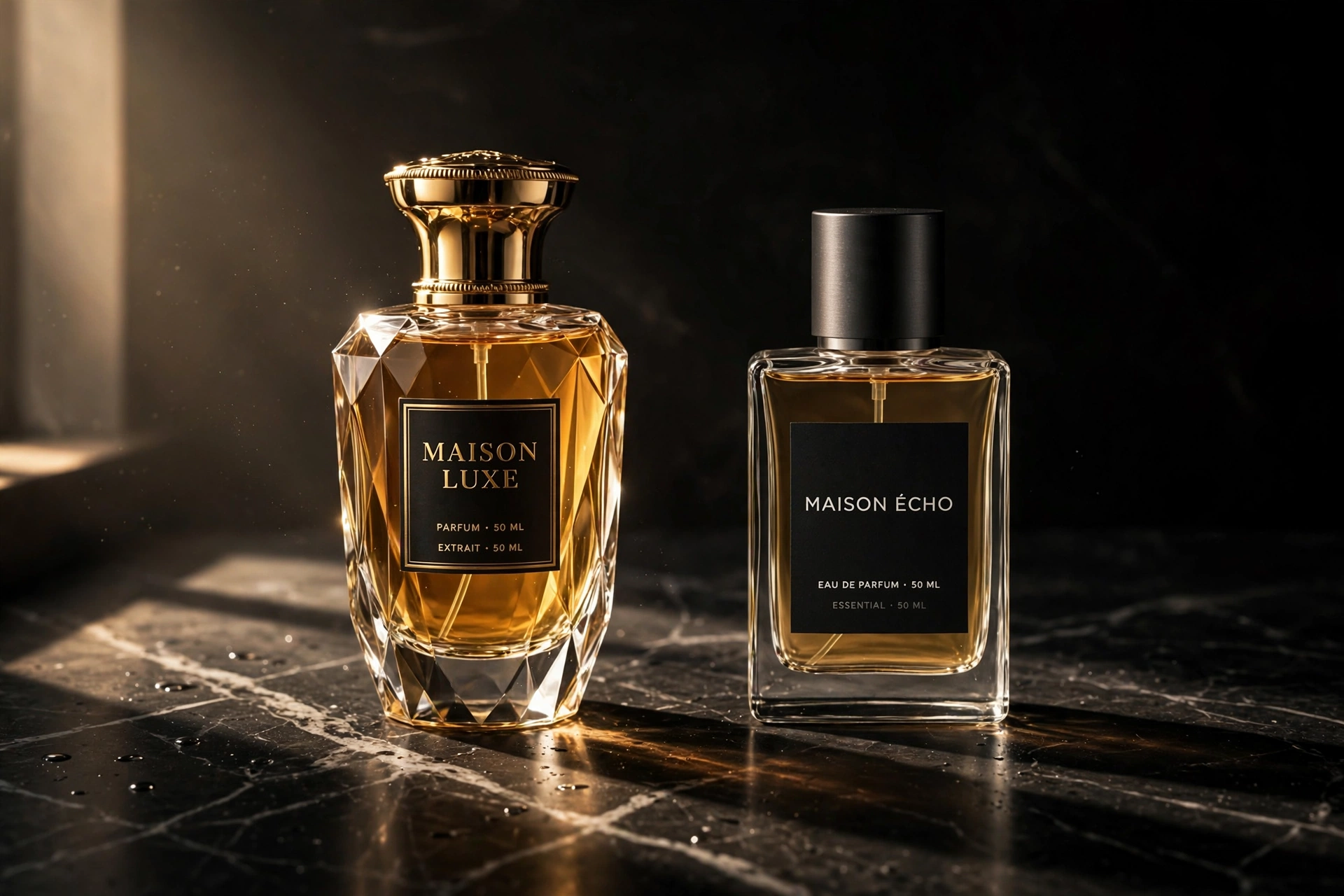
In recent years a phenomenon has exploded: brands selling "inspired-by" perfumes or "clones" of famous fragrances at a fraction of the price. A $300 niche perfume has its $30 version. Opinions are passionate on both sides. Let's bring some order with an honest look.
What exactly a clone is
A clone (also called "inspired-by", "dupe" or "alternative") is a perfume created to smell as close as possible to another famous, usually much more expensive perfume. It is not a counterfeit: it doesn't copy the bottle or use the original's name. It's its own fragrance that deliberately seeks an olfactory resemblance.
There's a whole spectrum: from shameless clones that imitate even the name with a play on words, to elegant "inspired-by" scents that take the general idea and develop it with their own personality.
Why they exist and why they work
The reason is economic and obvious: not everyone can or wants to pay $200 or $300 for a bottle. Clones democratize access to olfactory profiles that would otherwise be out of reach. For many people they're the gateway to the world of perfumery.
There's also a practical argument: if you want a perfume for the gym, for daily work, or to test whether a style suits you before investing, a cheap clone makes total sense.
How they really differ
Ingredient quality
Here's the main difference. A $300 perfume uses pricier, more natural raw materials in higher concentration. The clone uses cheaper ingredients to achieve a similar effect. The result: the resemblance is usually greatest in the opening (the first 30 minutes) and fades with the hours, when the base notes emerge — that's where expensive ingredients make the difference.
Longevity and projection
Many clones project strongly at first (sometimes more than the original) but don't last as long. Others last well but with a flatter, less interesting evolution. There are exceptions in both directions, but that's the general trend.
Originality and nuance
The original usually has more nuance, depth and a richer evolution. The clone captures the "idea" of the perfume: you recognize it instantly, but if you compare them side by side, you notice the original has "something more" going on. That "something more" is what the money pays for.
When a clone makes total sense
- To try a style: do oud scents appeal to you but you've never worn one? A cheap clone lets you explore without risking $250.
- For rough use: the gym, physical work, travel where the bottle could get lost. Better a $25 clone than a $300 niche.
- If the resemblance is enough for you: some people try the original and the clone and honestly decide the difference doesn't justify the price. That's a perfectly valid decision.
- Large collections: if you like to vary a lot, clones let you have more options for less money.
When the original is worth it
- It's your personal signature: if it's the perfume that defines you and you wear it daily, the extra quality shows and pays off.
- You want the full experience: the evolution on the skin, the nuances, the base hours later. That's where the original usually wins.
- You value the art: behind a great perfume there's a perfumer and creative work. Paying for the original also supports that art.
- Special occasions: for important moments, many people prefer the safety of the original.
How to choose a good clone
Not all clones are equal. Some brands have earned a reputation for quality and fidelity, while others are a lottery. Before buying:
- Look for reviews from people who have compared the clone with the original side by side.
- Distrust clones that promise "100% identical": it doesn't exist. If the first sniff instantly reminds you of the original, it is a good clone; if the resemblance holds past the first minutes, it is a great one.
- Start with samples or small bottles before buying the big one.
- Pay attention to reported longevity, not just the initial resemblance.
The honest conclusion
Clones are neither a scam nor a miracle: they're one more option on the market. The original is almost always the better perfume in absolute terms, but "better" doesn't always mean "the better buy for you." A well-chosen clone, used in the right context, can give you much of the pleasure for a fraction of the price. And that, for many people and on many occasions, is totally worth it.
The important thing is to buy with your eyes open: know what you're buying, why, and don't expect from a clone what only an original can give. With that honesty, clones are a fantastic tool. Without it, they're a guaranteed disappointment.
Want the perfect recommendation every morning?
Aromario organizes your collection and suggests the ideal perfume based on the weather and your plans for the day. Free for Android.
Discover Aromario